Humidity Control Before Piano Tuning: What Toronto Owners Should Check
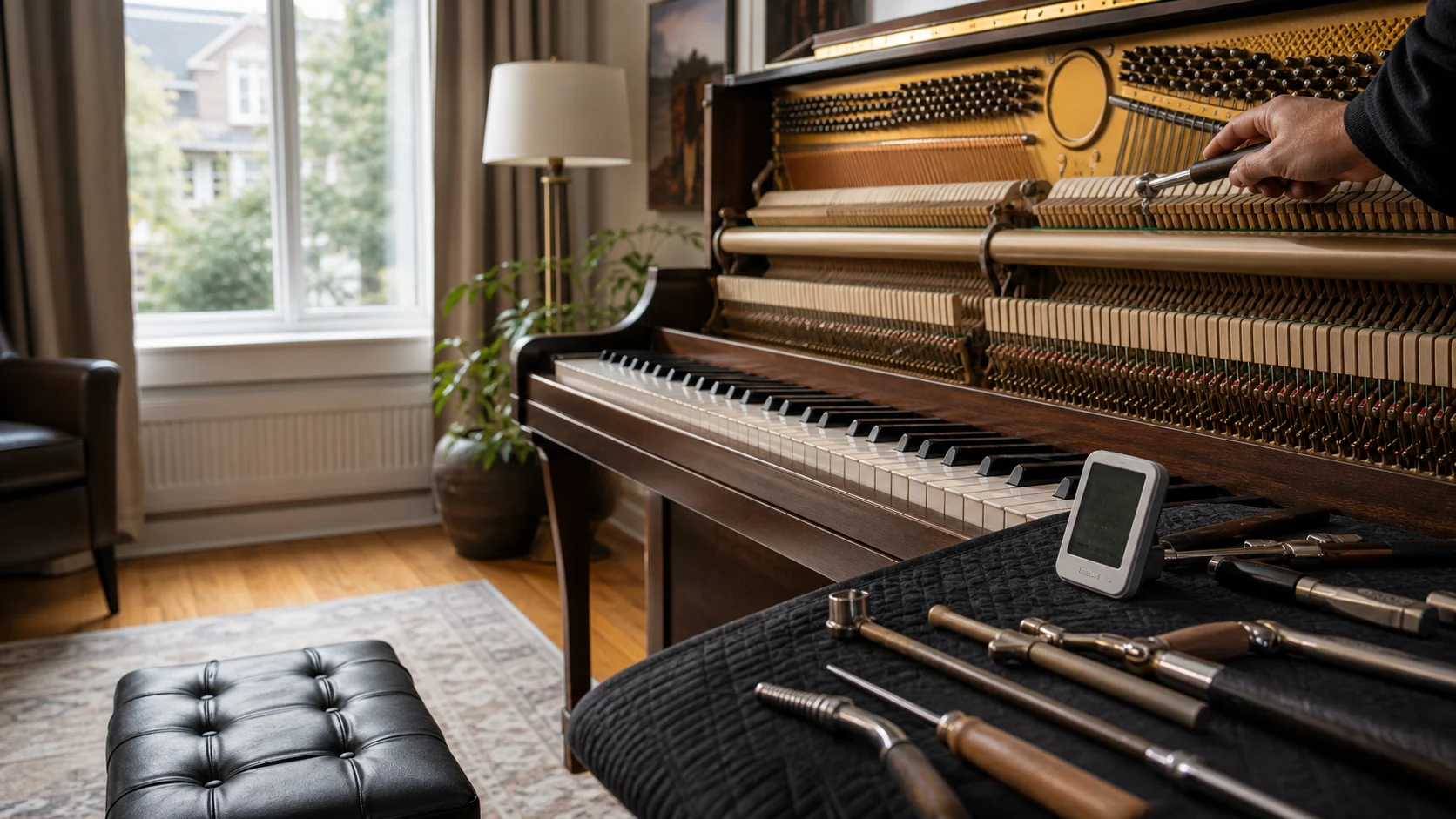
A Toronto piano care guide covering room humidity, vents, windows, seasonal drift, and what to stabilize before booking a tuning.
Before tuning a piano in a Toronto home, I look at the room as carefully as I look at the instrument. A tuning can be accurate when I finish and still move sooner than expected if the piano is beside a heating vent, exposed to direct sun, or passing through a rapid seasonal humidity change.
The objective is not to achieve one perfect humidity number for a few hours. It is to reduce repeated swings. Pianos respond to the moisture content of their wooden parts, especially the soundboard and action components. A stable room gives the tuning a better chance to remain useful and makes mechanical symptoms easier to diagnose.
Start with a hygrometer, not a guess
Indoor air can feel comfortable to a person while still being unusually dry or damp for a piano. I recommend using a reliable digital hygrometer near the instrument and recording the readings over several days. One reading taken immediately after cooking, showering, opening windows, or running a humidifier does not describe the normal pattern.
Place the hygrometer close enough to represent the piano's environment but not directly on a vent, radiator, sunny window ledge, humidifier outlet, or exterior wall. Check morning and evening readings. The range and speed of change are often more informative than a single average.
Look for direct sources of heat and moisture
A piano should not receive furnace air, portable-heater heat, fireplace radiation, or strong afternoon sun. These sources can dry one side of the cabinet more aggressively than the rest of the room. In summer, an open basement window or nearby dehumidifier exhaust can create the opposite problem.
I also check exterior walls, plumbing areas, and floor registers. A grand piano's open structure exposes a large area to the room, while an upright placed tight against a cold wall may experience a different microclimate behind the cabinet. Small placement changes can sometimes reduce the most direct exposure without redesigning the room.
Aim for stability across Toronto seasons
Many piano technicians use a moderate relative-humidity range around 40 to 50 percent as a practical reference, but the exact reading is less important than avoiding prolonged extremes and sudden changes. The building, piano condition, season, and measuring device all affect the interpretation.
During winter heating, a properly maintained room humidifier may help, but it must not spray mist onto the piano or create condensation. During humid weather, air conditioning or a dehumidifier may be needed. Any device should be sized for the space, cleaned as directed, and monitored rather than run blindly.
Give a recent climate change time to settle
If a piano has just arrived from storage, moved between buildings, or experienced a major heating or air-conditioning change, I want to know when that happened. The cabinet may feel normal while the soundboard, bridges, action, and strings are still responding to the new environment.
There is no single waiting period that fits every move. A local move between similar homes is different from a winter delivery from a cold truck or a piano moved out of a damp basement. The technician can advise based on the conditions, the urgency of the event, and whether the appointment is for routine tuning or performance preparation.
Humidity symptoms can look like repair problems
Seasonal moisture changes can contribute to sticking keys, sluggish action centres, changing key clearance, small cabinet noises, and pitch movement. Dryness can also reveal loose joints or increase the risk associated with already weakened wood. These symptoms should be inspected rather than automatically blamed on humidity.
If only one key sticks, one pedal squeaks, or one note will not hold, there may be a local mechanical problem. If an entire section changes during a weather transition, room conditions become a stronger part of the diagnosis. A useful service visit separates the environmental pattern from worn or damaged parts.
What to check before booking the tuning
Record several days of humidity readings, note any recent move or renovation, and tell the technician when the heating or cooling system changed. Clear normal access around the piano, but do not remove action parts or apply household lubricants. Mention broken strings, loose pedals, sticking keys, water exposure, or a piano that has not been serviced for years.
If the room is temporarily extreme, begin correcting it gradually and discuss timing before the appointment. Rapidly forcing the humidity in the opposite direction can create another swing. A measured plan is better than chasing the display hour by hour.
Stable room conditions do not make a piano maintenance-free. They make tuning, regulation, and repair decisions more predictable. When the environment is understood first, I can spend the appointment correcting the piano instead of guessing which changes will disappear with next week's weather.
← Back to Learning Center