Technician Diary: A Tuned Piano That Still Sounded Harsh
A Piano Inside note explaining voicing, tuning, hammer condition, and why tone can feel bright or uneven.
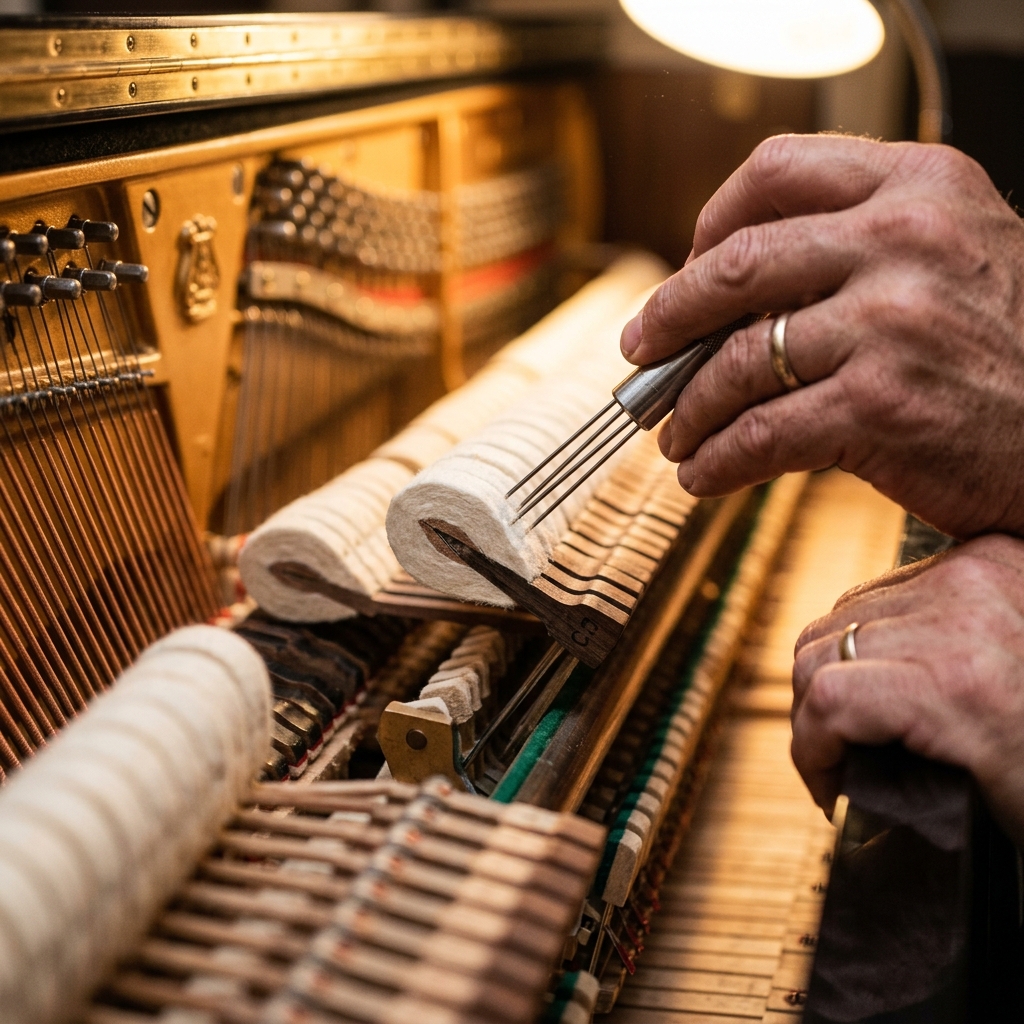
Technician diary: a customer told me the piano had been tuned but still sounded sharp and tiring in the room. The pitch was not the main issue. The hammers were compacted and the tone was uneven across the keyboard.
The lesson is that tuning adjusts pitch, while voicing adjusts tone. When a piano sounds harsh even after tuning, hammer condition and room acoustics need to be part of the diagnosis.
What I check before calling it a voicing problem
When a piano sounds bright after tuning, I do not assume the tuning was the problem. I listen for whether the harshness is spread across the whole instrument or concentrated in one register. A few sharp-sounding notes can point to hammer wear, uneven strike points, room acoustics, or action regulation rather than pitch.
The hammers tell much of the story. Deep grooves, hardened felt, and uneven contact with the strings can make a piano sound metallic even when the notes are tuned accurately.
Why tuning and voicing solve different problems
Tuning adjusts pitch. Voicing adjusts tone. A well-tuned piano can still feel tiring if the hammers are compacted or if the room reflects too much treble energy.
Before recommending voicing, I also check whether the piano has stable tuning, reasonable regulation, and a room setup that is not fighting the instrument.
My practical rule
I try to give the owner a clear next step: tune now, wait for the piano to settle, improve humidity control, inspect before buying, or plan repair work before spending more money. A good piano service visit should make the instrument clearer, but it should also make the decision clearer.
← Back to Learning Center