Technician Diary: Sticking Piano Keys in a Toronto Home
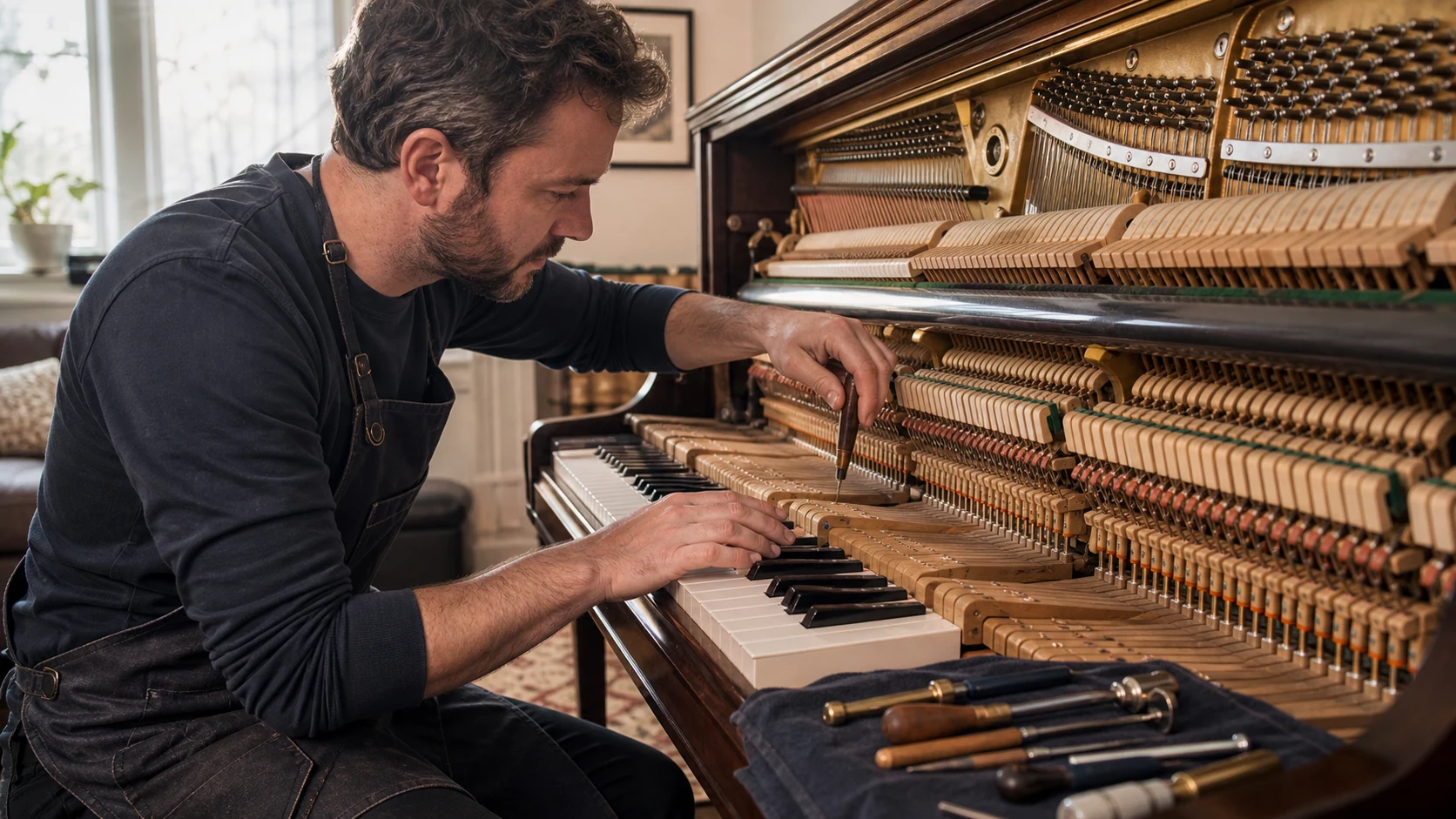
A technician note about sticking piano keys, humidity, swollen wood, action friction, debris, and seasonal room changes.
Technician diary: I inspected a Toronto piano where a few keys were slow to return. The owner feared a major repair, but the first clues pointed to humidity and friction in the action.
The lesson is that sticking keys are often a room-condition or regulation problem before they become a major repair. A technician can separate swollen wood, worn bushings, debris, and deeper action issues before the problem spreads.
Why Toronto winter is hard on pianos
Dry winter heating lowers indoor relative humidity, and an acoustic piano responds to that change. The soundboard can lose moisture, pitch can drop, action parts can feel different, and small noises or sluggishness may appear as wood and felt adjust.
The goal is not to keep the room perfect every hour. The goal is to avoid extreme swings that keep pulling the instrument in different directions.
What I look for during a winter service call
I check the tuning pattern, the middle register, the action response, pedal behavior, and whether the piano is near vents, direct sunlight, exterior walls, or basement dampness.
If the room is too dry, another tuning alone may not solve the long-term problem. Humidity control and placement often matter as much as the appointment itself.
My practical rule
I try to give the owner a clear next step: tune now, wait for the piano to settle, improve humidity control, inspect before buying, or plan repair work before spending more money. A good piano service visit should make the instrument clearer, but it should also make the decision clearer.
← Back to Learning Center