Sticky Keys in a Humid Home: When Action Regulation Helps
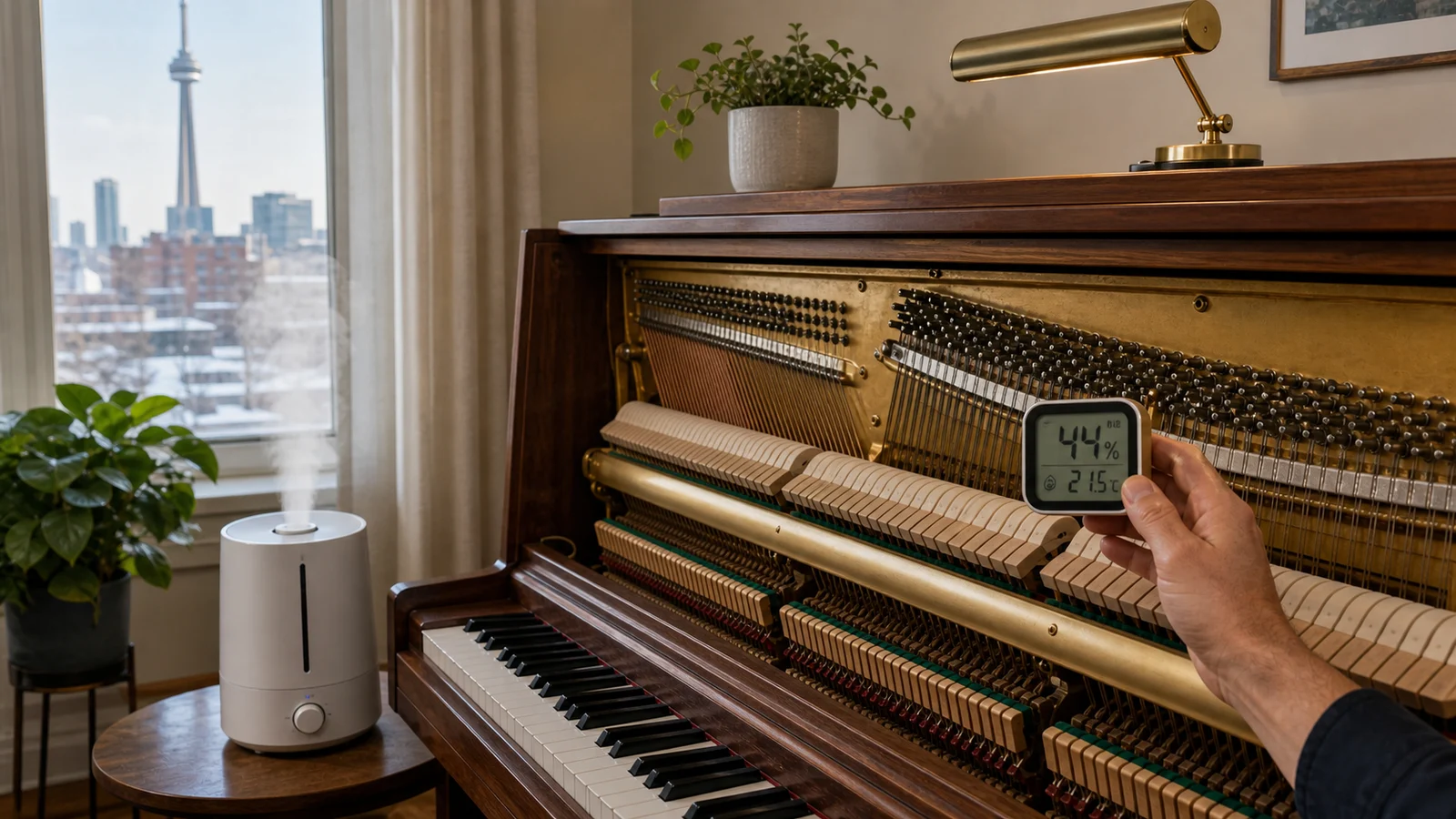
A Piano Inside action regulation guide covering sticky keys, swollen bushings, friction points, key dip, and humidity diagnosis.
Sticky piano keys often appear during humid weather because felt bushings, wooden keys, and action centres can swell just enough to add friction. A single slow key may have a local cause, but a whole section of sluggish touch often points toward room conditions and regulation drift.
A careful service visit separates humidity symptoms from worn parts, debris, warped keys, or poor adjustment. I check key return, key dip, let-off, repetition, friction points, and room humidity before deciding whether local easing, broader action regulation, or environmental correction should come first.
Why humid rooms make keys feel slow
A piano action depends on tiny clearances. Wood, felt, leather, pins, flanges, springs, and hammer parts all need enough freedom to move quickly and return cleanly. When indoor humidity rises, felt bushings and wooden parts can absorb moisture. The change may be small, but it can be enough to make a key hesitate or feel heavy under the fingers.
I look for patterns before deciding what to adjust. One slow key may be caused by debris, a tight bushing, a warped key, or a local action centre. Several neighbouring keys that slow down during humid weather often point toward room conditions. A whole action that feels heavy may need regulation work, but the room still has to be part of the discussion.
What I check at the piano
The first step is observation, not forcing parts to move. I check how the key returns, whether the hammer repeats properly, whether the damper is free, and whether the problem changes with soft and firm playing. I may compare key dip, let-off, lost motion, repetition, hammer travel, and friction points before deciding whether the issue is local or general.
I also ask what changed recently. Open windows, basement dampness, air conditioning, new humidifiers, renovations, or a move from one room to another can all affect the action. If the piano has not been serviced in years, humidity may reveal a problem that was already developing. The diagnosis works best when the room history and the mechanical symptoms are considered together.
Why household fixes can make it worse
Owners sometimes try sprays, oils, graphite, or pressure on the key to free a sticky note. Those shortcuts can create bigger problems. Liquid lubricants can stain felt, attract dust, swell cloth, or travel into places where they do not belong. Forcing a key can bend or break parts that only needed careful easing.
A technician uses controlled methods because the tolerances are small. A tight front rail bushing may need gentle easing. An action centre may need proper treatment or replacement. A warped key, foreign object, misaligned hammer, or binding damper needs a different repair. The right fix depends on where the friction begins, not simply on which key feels annoying.
When regulation becomes part of the answer
If the action is broadly uneven, I may recommend regulation rather than a quick local fix. Regulation adjusts the relationship between the key, wippen, jack, hammer, let-off, repetition, and damper system so the piano responds evenly. Humidity can make old regulation problems more noticeable because parts that were barely within tolerance begin to drag.
Regulation does not replace tuning, and tuning does not replace regulation. A piano can be in tune and still feel slow. It can also feel smoother after action work while still needing pitch correction. I separate tone, touch, and pitch so the owner can decide what matters most for the way the piano is used.
How room control prevents repeat service calls
If humidity is the main trigger, the long-term fix includes the room. A small hygrometer near the piano helps show whether the air is stable or swinging between extremes. Many homes do best when relative humidity stays in a moderate range and changes gradually. Basements, exterior walls, vents, and direct sun deserve extra attention because they can create a small climate around the piano that is different from the rest of the house.
Air conditioning, dehumidifiers, or room humidifiers can help when used carefully, but they should not blow directly at the instrument or create condensation. I prefer measured corrections over sudden changes. A piano that is forced from damp to dry too quickly can trade one problem for another.
The practical next step
If one key sticks once, make a note of when it happens and whether the room was humid. If several keys become slow, book an inspection before trying home remedies. I can identify whether the piano needs local easing, cleaning, action regulation, humidity control, or a staged plan.
The goal is not only to free the sticky key for today. It is to understand why it became sticky so the piano feels predictable through the next seasonal change.
← Back to Learning Center