Technician Diary: Why a Pitch Raise Comes Before Fine Tuning
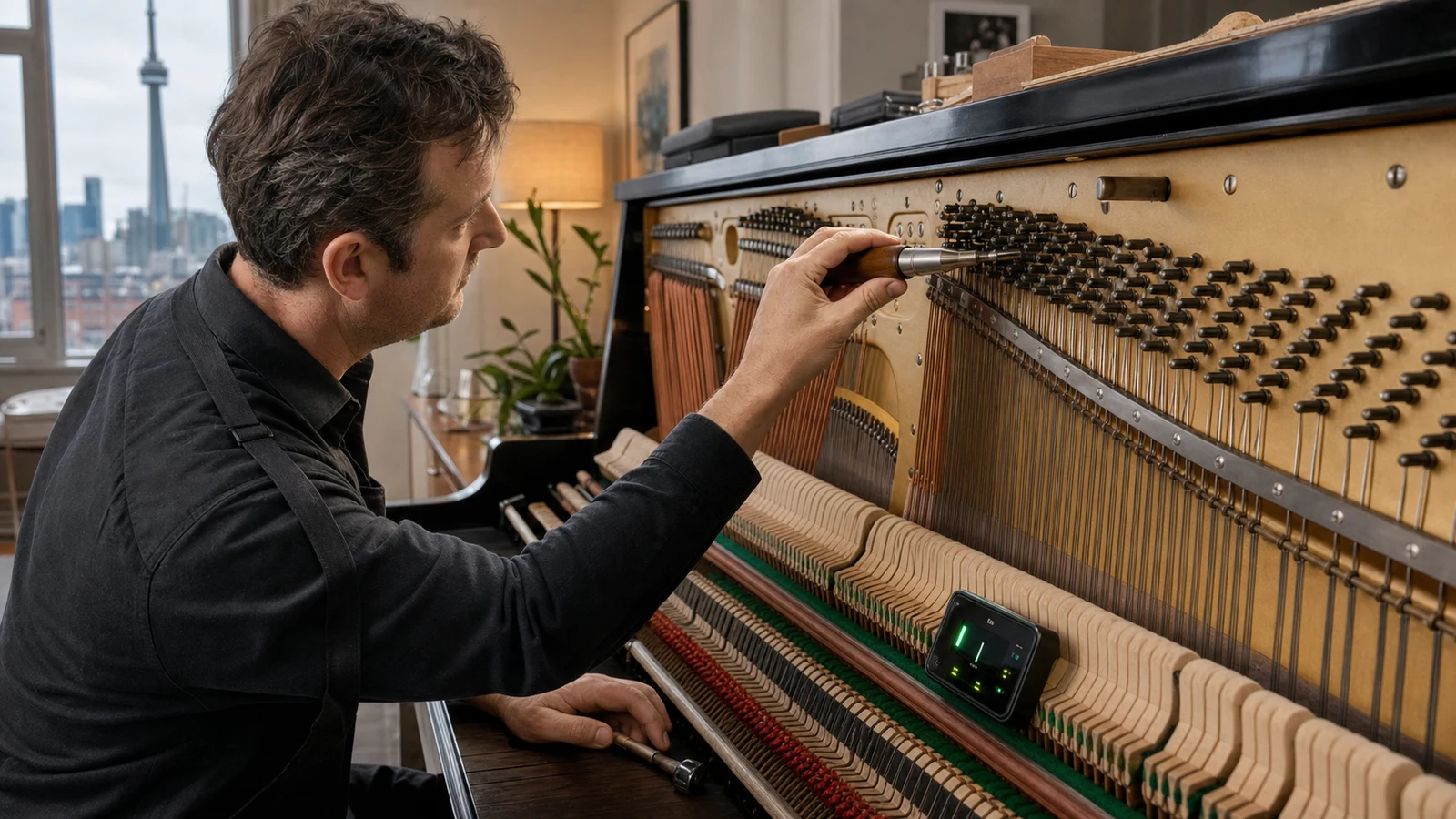
A Piano Inside technician note explaining pitch raises, A440, string tension, stability, and why neglected pianos need staged tuning.
Technician diary: James inspected a Toronto upright that had not been tuned for several years. The owner hoped for one normal tuning, but the first pitch check showed the piano was far enough below A440 that a pitch raise needed to come before fine tuning.
A pitch raise is not a shortcut. It is a controlled first pass that brings string tension, the soundboard, and the plate closer to their working range before the final tuning pass. If a technician tries to make every note perfect immediately, the early notes can drift again as the rest of the piano comes up to pitch.
The practical lesson is to stabilize the instrument before judging the final result. A neglected piano may need staged tuning, room-humidity control, and a follow-up appointment before it holds pitch confidently.
Why James checked pitch before tuning
The first measurement told James whether the piano was close enough for a normal tuning or whether it needed correction first. A piano can sound simply out of tune to the owner, but a technician listens for the size and pattern of the drift. If the whole instrument is well below standard pitch, the problem is no longer only messy unisons. The entire string scale is sitting at lower tension than intended.
That difference matters because each tuning move changes more than one string. Raising one section affects the pressure on the bridge and soundboard, and the nearby notes can move as the piano absorbs the change. On a neglected upright, James expects the first pass to be about controlled tension rather than final polish. That keeps the work honest and gives the later fine tuning a better chance of staying where it belongs.
What a pitch raise actually changes
A pitch raise brings the piano closer to A440 by increasing string tension across the instrument in a measured way. It is usually faster and broader than fine tuning because the goal is not to make every interval perfect on the first pass. The goal is to move the piano into the range where a careful final tuning can succeed.
This is especially important on older acoustic pianos that have gone through several Toronto heating seasons without service. Dry winter air can pull pitch down as the soundboard loses moisture. Humid summers can push some sections differently. After years of that cycle, the piano may not respond evenly. A pitch raise gives the frame, strings, soundboard, bridges, and tuning pins a chance to settle closer to normal tension before James refines the tuning.
Why one perfect pass does not hold
Owners sometimes ask why a technician cannot simply tune each note perfectly once and be done. The reason is that the piano is a connected structure. When many strings are pulled upward, the overall tension load changes while the work is still happening. Notes tuned early in the appointment may drift as later sections are raised.
Fine tuning too early can waste time and produce a disappointing result. James would rather explain the sequence clearly: first bring the piano near pitch, then tune with more precision. If the piano is very low, has loose tuning pins, old strings, or unstable room conditions, he may also recommend a follow-up visit after the instrument has settled. That is not upselling; it is matching the service plan to the physics of the piano.
Room conditions still matter after the visit
A successful pitch raise does not remove the need for room stability. If the piano sits beside a heat vent, sunny window, damp exterior wall, fireplace, or basement corner with poor airflow, the tuning can keep moving after the appointment. The owner should watch the room with a hygrometer and aim for steady relative humidity, usually near 40% to 50% when possible.
James also checks how the piano feels under the fingers. A piano that has been neglected may have sluggish keys, uneven touch, pedal noise, or hammer wear in addition to low pitch. Those issues do not all get solved by tuning. They help decide whether regulation, voicing, cleaning, or repair should be discussed after the pitch is stable.
Practical plan for a neglected piano
The safest plan starts with diagnosis. Find out how far below pitch the piano is, whether the tuning pins feel stable, whether strings or bridges show warning signs, and whether the room is likely to keep pulling the instrument out of tune. Then decide whether the first appointment should be a pitch raise plus fine tuning, or a staged plan with a later follow-up.
For the owner, the main point is simple: a piano that has not been serviced in years may need patience before it sounds settled. A pitch raise protects the final tuning by doing the heavy tension correction first. Once the piano is closer to A440 and the room is stable, James can make the musical adjustments that people actually hear: clean unisons, calmer octaves, steadier chords, and a piano that is more enjoyable to play.
← Back to Learning Center