Technician Diary: Uneven Piano Touch and Action Regulation
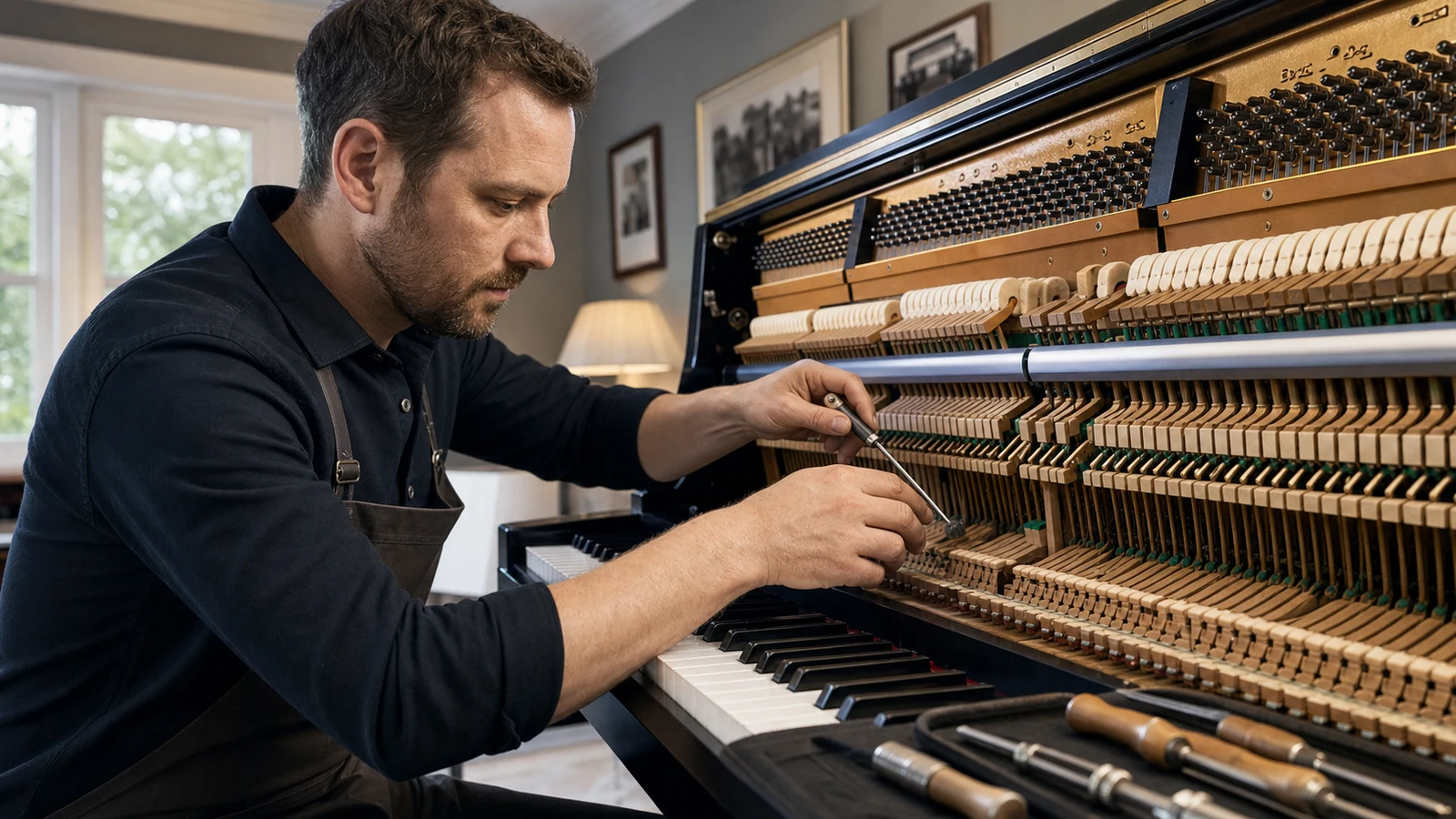
A Piano Inside technician note about uneven keys, sluggish response, action regulation, friction, felt wear, and acoustic piano maintenance.
Technician diary: a customer told me the piano was in tune but still felt uneven. Some notes responded quickly, others felt heavy, and a few repeated poorly during soft playing.
The diagnosis started with the action, not the strings. Felt compression, friction, key height, let-off, drop, and repetition all affect how a piano feels under the hands. The lesson is that tuning fixes pitch, while regulation restores control.
What I checked first
On this visit, I did not start with a generic answer. I started with pitch level, unison spread, tuning history, recent moving, and whether the piano needed pitch correction before fine tuning. That first check matters because two pianos with the same complaint can need completely different advice.
A piano is built from wood, felt, steel, leather, glue, and thousands of small moving parts. In Toronto homes, those parts are constantly reacting to heating season, summer humidity, room placement, recent moving, and how regularly the instrument has been serviced.
Clues I did not ignore
- Whether the problem appeared suddenly or slowly over several seasons.
- Whether the piano sits near a vent, window, exterior wall, fireplace, or damp basement area.
- Whether the pitch problem is even across the piano or concentrated in one section.
- Whether the keys, pedals, hammers, and action feel consistent from bass to treble.
- Whether the owner is planning tuning, repair, moving, purchase, or appraisal next.
What I explained to the owner
The useful answer is usually not just "tune it" or "repair it." The better answer is to separate the symptom from the cause. A piano can be out of tune because of normal seasonal drift, but it can also be reacting to humidity, loose pins, old strings, action friction, hammer wear, or a recent move.
That is why I prefer giving the owner a practical order of operations. First, understand the room. Second, check whether the piano can hold pitch. Third, decide whether tuning, pitch raise, regulation, voicing, or repair should come first. This keeps the customer from paying for the wrong service in the wrong order.
Practical care plan
- Keep the piano away from direct heat, strong sunlight, and damp exterior walls.
- Watch whether the problem changes after rain, furnace season, or a move.
- Keep the room as stable as possible instead of chasing perfect numbers for one day.
- If the piano is very low in pitch, expect pitch correction before fine tuning.
- If buying used, inspect before paying for moving and tuning.
Why this matters for Toronto homes
Toronto pianos often live through dry winter heating and humid summer air. That does not mean every piano needs major work, but it does mean the room has to be part of the diagnosis. The best service plan protects tone, touch, tuning stability, and the owner's budget at the same time.
Why I separate pitch correction from fine tuning
If a piano has drifted far below A440, a single fine tuning may not hold well. The strings, plate, bridge, and soundboard are being asked to absorb a large tension change at once.
A pitch raise brings the piano closer to standard pitch first. The fine tuning can then settle more accurately after the instrument has moved closer to the tension it was designed to carry.
What affects tuning stability after the appointment
Humidity, temperature, piano placement, loose tuning pins, string condition, and recent moving can all affect how long a tuning lasts.
When I tune a piano, I also look for environmental clues because the room often explains why the piano changed in the first place.
My practical rule
I try to give the owner a clear next step: tune now, wait for the piano to settle, improve humidity control, inspect before buying, or plan repair work before spending more money. A good piano service visit should make the instrument clearer, but it should also make the decision clearer.
← Back to Learning Center