Used Piano Buying Guide: Hammer Wear, Voicing, and Hidden Tone Costs
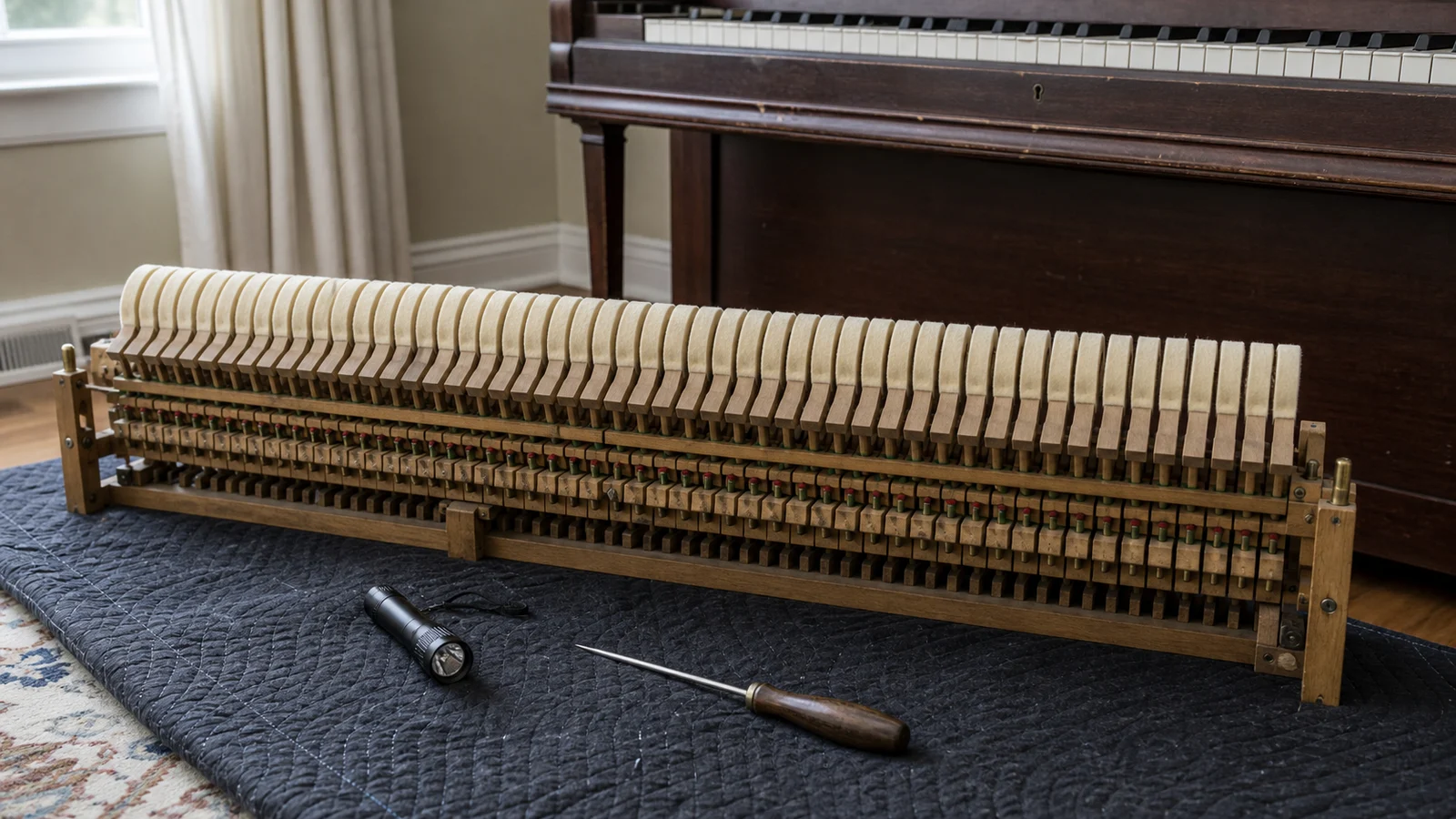
A used acoustic piano buying guide on hammer grooves, bright tone, voicing needs, regulation, room acoustics, and inspection before purchase.
When I inspect a used piano for a buyer, the cabinet is rarely the first thing that decides whether the instrument is good value. A polished case can photograph beautifully while the hammer felt, action geometry, and tonal balance reveal years of use. Hammer wear is especially important because it can affect how the piano speaks even when the strings are tuned accurately.
I begin by listening before making assumptions. I play softly and firmly through every register, repeat notes, compare neighbouring keys, and listen for sudden changes in brightness. Then I look inside. The goal is not to make an old piano look defective. It is to understand what work may be needed after purchase, delivery, and tuning so the buyer can judge the full cost rather than the listing price alone.
What hammer grooves can reveal
Every acoustic piano develops marks where the hammers meet the strings. Light, even impressions are normal. Deep grooves, flattened crowns, hard felt, or uneven wear can indicate substantial playing time or an action that is no longer striking consistently. A heavily grooved hammer may produce a sharp initial attack, weak control at soft volume, or noticeably different tone from one note to the next.
Grooves do not automatically mean that the hammer set must be replaced. Depending on felt depth and hammer shape, careful filing and reshaping may restore a cleaner contact surface. The important question is how much usable felt remains and whether earlier filing has already reduced the hammers significantly. That judgment is difficult to make from listing photographs.
Why tuning does not correct harsh tone
Tuning adjusts pitch relationships. Voicing adjusts tonal colour and response, mainly through careful work on the hammer felt and related regulation. A piano can be accurately tuned and still sound bright, brittle, uneven, or tiring in a small room. Buyers sometimes budget for one tuning after delivery and are surprised when the complaint they hear is actually tonal rather than pitch related.
I separate those questions during an inspection. Are the unisons out of tune, or does the note remain harsh after the pitch is stable? Does the brightness follow worn hammers, or is it amplified by bare floors, glass, and hard walls? Is the problem isolated to one section, or does the whole action need regulation before voicing can be consistent? The answer changes the likely work and cost.
Action regulation and hammer alignment
Hammer condition cannot be judged in isolation. Lost motion, uneven key dip, sluggish centres, inconsistent let-off, worn knuckles, and poor hammer alignment can all affect tone and control. If a hammer does not meet the strings squarely, filing or voicing alone may not solve the problem. Regulation creates a consistent mechanical foundation so tonal work can produce predictable results.
During a buying inspection, I check repeated notes, soft playing, pedal operation, key return, hammer travel, and the transition between registers. I also look for evidence of moisture swings, corrosion, moth damage, loose parts, or previous repairs. These observations help distinguish ordinary maintenance from a larger action project.
Room acoustics and the move itself
The seller's room is part of what the buyer hears. A piano that seems warm in a furnished room may sound much brighter after delivery to a condo with hard surfaces. The reverse can also happen. This is why I avoid promising that voicing in one location will translate perfectly to another.
Moving also changes the context. The piano should be placed away from obvious heat sources and severe humidity changes, allowed to settle, and then evaluated in its new room. Tuning, regulation, and voicing can be planned in the right order after the instrument and room are stable enough to judge honestly.
Questions worth asking before purchase
I ask when the piano was last tuned, how regularly it was serviced, whether hammers were filed or voiced, and whether the action has been regulated. I also ask where the piano has lived and whether there have been humidity, water, or storage problems. Service records are useful, but the present condition still matters most.
Buyers should also include moving cost, access difficulty, initial tuning, possible pitch correction, and likely maintenance in the decision. A modestly priced piano with stable tuning pins and manageable hammer wear may be sensible. A free piano needing extensive action and tonal work can become the more expensive choice.
A practical buying decision
The purpose of an inspection is not to find a perfect used piano. Most used instruments show wear. The useful outcome is a realistic separation between acceptable age, routine maintenance, and repairs that materially change value.
Before committing to the move, I want the buyer to know whether the piano can deliver the touch and tone they expect, what should be serviced first, and which improvements are optional. Hammer grooves are only one clue, but they often open the most important conversation: not simply whether the piano can be tuned, but whether its mechanical and tonal condition makes sense for the buyer's home, playing level, and long-term budget.
← Back to Learning Center