Used Piano Buying Guide: Soundboard and Bridge Red Flags
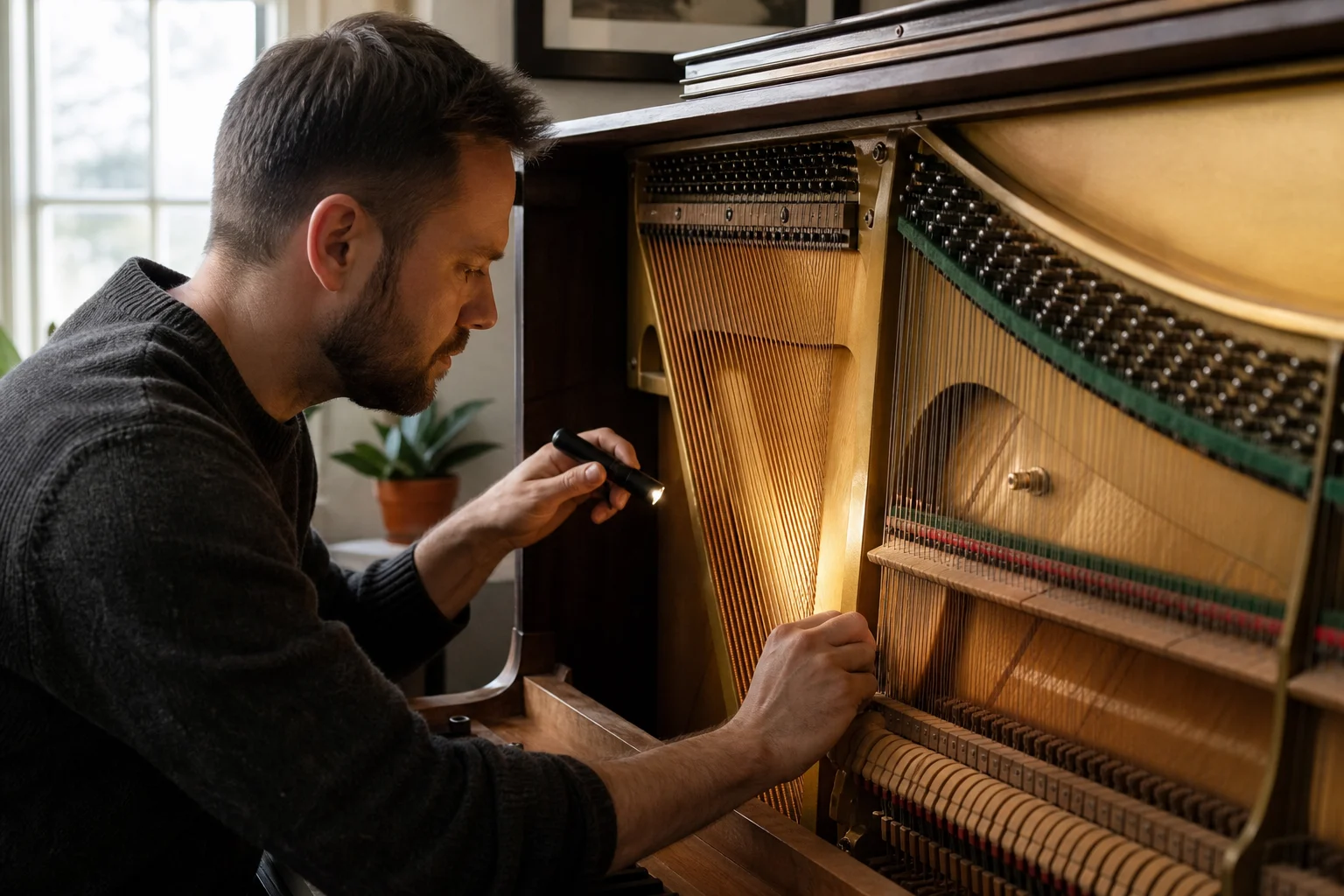
A used acoustic piano buying guide explaining soundboard cracks, bridge separation, buzzing, humidity history, and when to inspect before purchase.
A used piano can have a clean cabinet and still hide soundboard or bridge problems that affect tone, buzzing, sustain, and tuning stability. During an inspection, I look for cracks, loose ribs, bridge separation, corrosion, old water exposure, and clues that the piano lived through severe humidity swings.
Not every soundboard mark ruins a piano, but structural clues should be understood before paying for moving and tuning. The real purchase cost includes the instrument condition, delivery access, first tuning, possible pitch correction, and any repair work needed after the piano settles in its new room.
Why the cabinet is not enough
Used piano listings often show the outside first: polished finish, matching bench, clean keys, and a familiar brand name. Those details are useful, but they do not answer the most important questions. A piano can photograph well while the soundboard, bridges, tuning pins, strings, hammers, and action tell a different story.
I start by listening and then looking inside. Sustain, buzzing, weak tone, unstable pitch, and uneven response can all point to structural or maintenance history. The point of an inspection is not to reject every older piano. It is to understand whether the instrument is a reasonable purchase before the buyer pays for moving, first tuning, and possible repairs.
What the soundboard can reveal
The soundboard helps project the piano's tone. Small cosmetic marks or older cracks do not always make a piano unusable, but they need context. I check whether cracks are open, whether ribs appear loose, whether buzzing is present, and whether the tone dies too quickly in certain areas. A quiet visual crack is different from a structural problem that affects sound.
Humidity history matters here. Very dry rooms can shrink wood and open gaps. Damp rooms can contribute to swelling, corrosion, odour, and glue failure. A piano that lived beside a radiator, in a damp basement, or in unconditioned storage may have damage that is not obvious in photos. That is why I asks where the piano has lived, not only when it was last tuned.
Why bridges matter for tuning stability
The bridges transfer string vibration into the soundboard, and they also help define speaking length and pressure. If bridge pins are loose, if the bridge cap is cracked, or if strings are not bearing properly, the piano may buzz, lose sustain, or refuse to hold a clean tuning. These problems can be expensive and are rarely visible in a simple marketplace listing.
I check for bridge separation, cracks near pins, corrosion around strings, odd false beats, and notes that behave differently from their neighbours. A piano may still be worth buying with some age-related wear, but the buyer should know whether the issue is routine maintenance or a repair that changes the value of the instrument.
The inspection order I prefer
A practical inspection follows the risk. I check pitch level and tuning stability first because loose pins or unstable sections can make every future service less useful. Then I look at the soundboard, bridges, strings, plate, action, hammers, dampers, pedals, and cabinet clues. I also plays through the piano softly and firmly to hear tonal changes that a visual inspection alone may miss.
The room is part of the inspection. Hard floors, empty rooms, small condos, and basement placement can change how the piano sounds. I separate room acoustics from piano condition as much as possible so the buyer does not confuse a bright room with a damaged instrument, or a warm room with a healthy one.
Moving and first service costs
The purchase price is only the beginning. A used piano usually needs professional moving, settling time, tuning, and sometimes a pitch raise. If the action is worn, regulation or voicing may be needed before the piano feels and sounds balanced. If structural concerns are present, the buyer should understand those costs before committing.
I also considers access. A free or inexpensive piano can become a poor choice if it must be moved from a difficult basement, tight stairwell, or long carry and then needs significant repair. A more expensive piano in better condition may be the less costly decision after moving and service are included.
A sensible buying decision
A used piano does not need to be perfect. It needs to be honest. The buyer should know whether the instrument holds pitch, whether the soundboard and bridges are stable enough for normal use, whether the action is playable, and whether the room it came from created avoidable risk.
I give buyers a practical recommendation: proceed, negotiate, budget for service, or walk away. That clarity matters because the cost of the wrong piano often appears after it has already been delivered.
← Back to Learning Center