Used Piano Buying Guide: Loose Tuning Pins and Hidden Costs
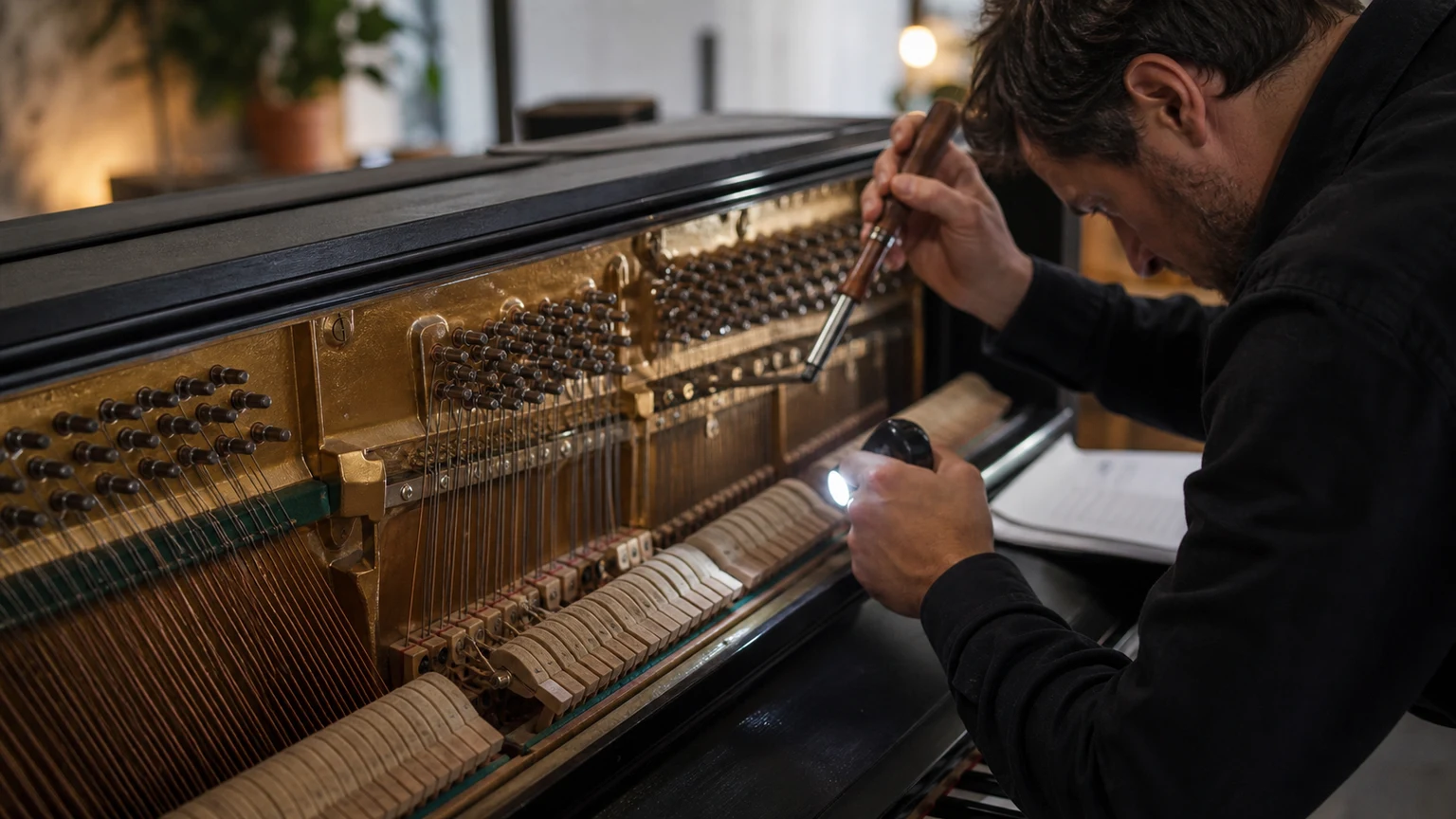
A technician buying guide on loose tuning pins, pitch stability, pinblocks, and why a cheap used piano can become expensive.
When I inspect a used piano, cabinet condition is the easy part to see. Tuning stability is harder. A piano can look clean, play every note, and still have tuning pins that no longer grip the pinblock firmly enough to hold string tension. That hidden problem changes the value of the instrument because another ordinary tuning may not solve it.
Loose tuning pins are not diagnosed from a listing photo or from one note being out of tune. I look for a pattern, compare it with the piano's service history, and separate normal seasonal drift from notes that repeatedly lose stability.
What the tuning pins and pinblock do
Each string is brought to pitch by turning a steel tuning pin set into a laminated wooden pinblock. The fit must create enough friction to resist string tension while still allowing controlled movement during tuning. If the wood has lost its grip because of age, moisture damage, extreme dryness, previous repairs or repeated pin movement, a pin may turn too easily and the note can drift soon after service.
A low piano does not automatically have a bad pinblock. An instrument that has gone years without tuning may be evenly below standard pitch but still have serviceable pin torque. The concern becomes stronger when a small group of notes is unusually unstable, when pins show previous treatment, or when pitch drops again without a matching seasonal explanation.
Clues I check during a used piano inspection
I begin by listening across the full keyboard rather than testing only a familiar middle register. I compare unisons, octaves and the general pitch level. A broad, even change can tell a different story from isolated strings that wander away from their neighbours.
I also inspect for rust, dark moisture marks, cracked wood around structural areas, mixed replacement strings and evidence of earlier pin treatment. None of those clues proves failure by itself. Together with tuning feel, service records and room history, they help establish whether the buyer is looking at routine maintenance or a larger structural risk.
The seller's statement that the piano ?just needs tuning? is useful only as a starting point. I want to know when it was last tuned, whether the technician reported loose pins, whether strings have broken, and where the piano has lived. A damp basement, unheated garage or room beside strong heat can matter more than a polished cabinet.
Why a quick pitch test is not enough
Phone tuning applications can show that a note is sharp or flat, but they cannot measure the condition of the pinblock. A piano can also sound reasonably in tune because nobody has recently attempted a meaningful pitch correction. The real question is whether the structure can accept adjustment and remain stable afterward.
Owners should not twist tuning pins as a do-it-yourself test. A small uncontrolled movement can break a string, damage the pin fit or make a technician's later assessment harder. Pin torque and tuning stability should be evaluated with the right tools and with an understanding of the instrument's condition.
Repair options depend on the piano
A technician may be able to address a limited loose-pin problem, but the appropriate method depends on the pinblock, pin size, surrounding wood and overall value of the piano. A local repair on an otherwise healthy instrument is a different decision from widespread instability across an ordinary upright with other major wear.
This is why I avoid quoting a repair from the symptom alone. Larger pinblock work can be appropriate for a valuable grand or a piano with strong musical and sentimental value, while the same expense may not make sense for a common used upright that also needs strings, action work and refinishing.
Calculate the hidden cost before moving
The purchase price is only the first number. Add professional moving, difficult access, pitch correction, fine tuning and any action or structural work that should happen soon. A free piano with poor tuning stability can cost more than a better instrument that was maintained and priced honestly.
Before arranging pickup, confirm the model and serial number, request clear interior photos, ask about tuning history and describe both moving routes. If the seller permits it, an inspection before purchase gives the buyer a much stronger basis for comparing the instrument with the total cost of owning it.
My practical buying rule
I do not reject a piano simply because it is old or out of tune. I look for evidence that its structure, action and room history support the next stage of use. Stable pins, an even action and manageable wear are more important than cabinet shine or a famous name.
When tuning-pin stability is uncertain, pause before paying for transport. The best order is condition first, moving plan second, and service budget third. That sequence prevents an inexpensive listing from becoming an expensive object that still cannot be tuned reliably.
← Back to Learning Center