Winter Piano Care for Dry Toronto Homes
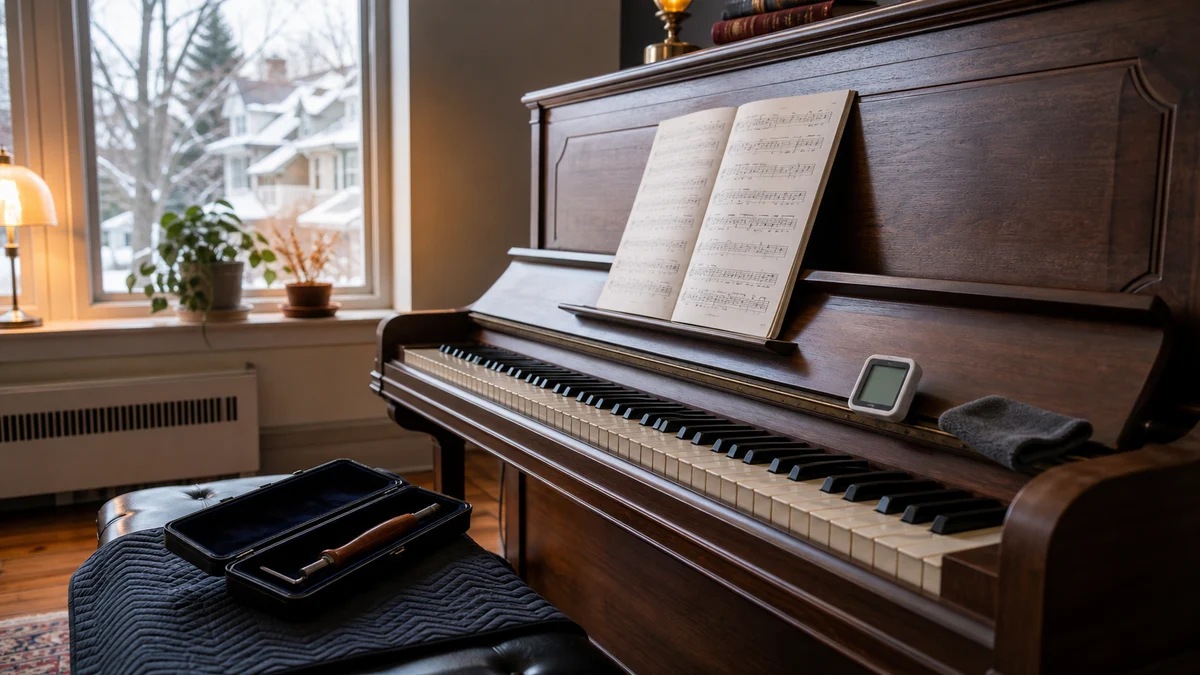
A technician diary on winter piano care in Toronto homes, including dry heat, soundboard movement, tuning drift, action changes, and humidity control.
Technician diary: winter piano problems in Toronto usually begin quietly. A piano that felt normal in the fall can become thinner in tone, lower in pitch, or less even in touch once the heating season dries the room. The piano is reacting to its environment, not simply getting older overnight.
Dry air affects wood and felt. The soundboard can lose moisture, the pitch can drop, action parts can feel different, and small noises may become more noticeable. If the piano sits near a heat vent, exterior wall, fireplace, or direct winter sunlight, the changes can become stronger.
During a winter service call, I look at the tuning pattern first. If the pitch has dropped broadly, room dryness may be part of the story. If certain notes or registers behave differently, I also check tuning pins, strings, bridge condition, and action response. A good winter diagnosis should separate normal seasonal movement from mechanical problems.
For most homes, the practical goal is stable humidity, not perfection. Keeping the room roughly in the 40% to 50% relative humidity range helps the piano hold tuning better and protects the action and soundboard. If the room swings too much, another tuning alone may not last as long as the owner expects.
What I check before calling it a voicing problem
When a piano sounds bright after tuning, I do not assume the tuning was the problem. I listen for whether the harshness is spread across the whole instrument or concentrated in one register. A few sharp-sounding notes can point to hammer wear, uneven strike points, room acoustics, or action regulation rather than pitch.
The hammers tell much of the story. Deep grooves, hardened felt, and uneven contact with the strings can make a piano sound metallic even when the notes are tuned accurately.
Why tuning and voicing solve different problems
Tuning adjusts pitch. Voicing adjusts tone. A well-tuned piano can still feel tiring if the hammers are compacted or if the room reflects too much treble energy.
Before recommending voicing, I also check whether the piano has stable tuning, reasonable regulation, and a room setup that is not fighting the instrument.
My practical rule
I try to give the owner a clear next step: tune now, wait for the piano to settle, improve humidity control, inspect before buying, or plan repair work before spending more money. A good piano service visit should make the instrument clearer, but it should also make the decision clearer.
← Back to Learning Center