Technician Diary: Inspecting a Used Yamaha Upright Before Purchase
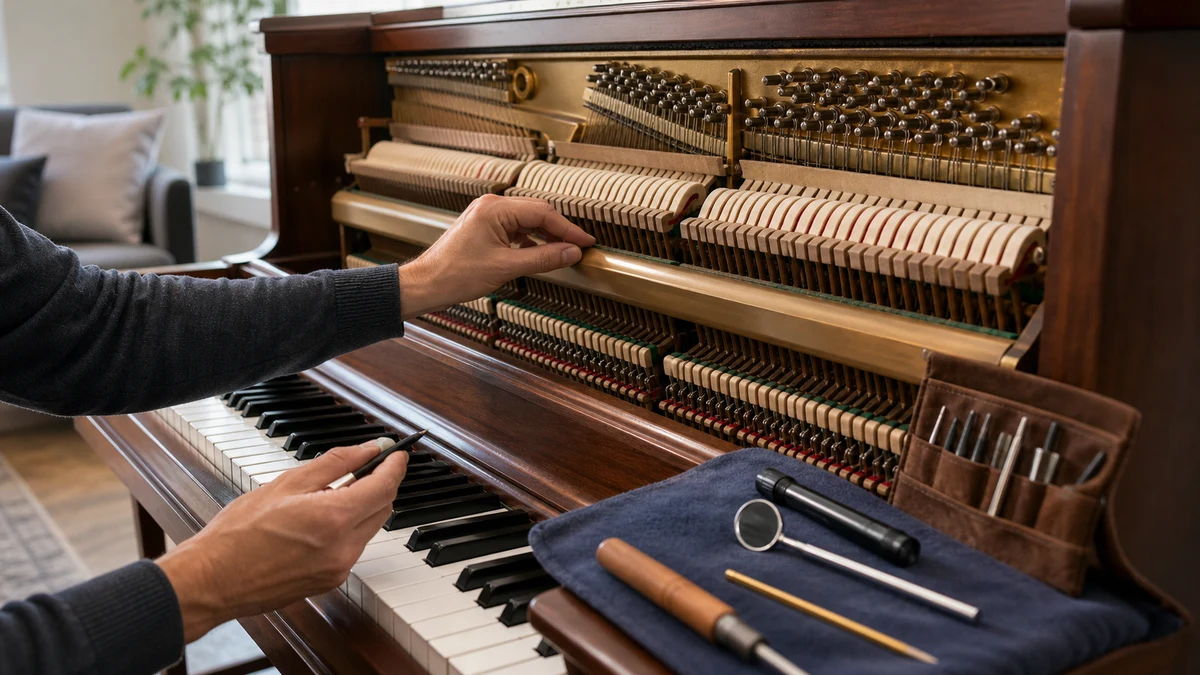
A used piano inspection note covering tuning pins, action wear, tone, cabinet condition, and room history.
A buyer asked me to inspect a used Yamaha upright that looked clean in listing photos. The polished cabinet made a strong first impression, but cabinet shine says very little about tuning stability, action wear or the room history that shaped the instrument.
Confirm the identity before judging the price
I first confirm the model and serial number rather than relying on the seller's description. Yamaha and Kawai have produced many upright sizes and series for different markets. A tall professional upright, a studio model and a small apartment piano should not be compared by brand name alone.
The serial number can help establish approximate production information, but age is only context. A newer piano exposed to moisture or heavy institutional use can be a worse purchase than an older instrument that received stable humidity and regular service.
Check pitch before evaluating tone
I play octaves and unisons across the keyboard and compare the general pitch level. A piano that is evenly below standard pitch may have gone too long without service and could need pitch correction before a fine tuning. A few isolated notes that fall away from their neighbours raise a different question: can those tuning pins hold?
Listening alone cannot provide a complete torque assessment, but the pitch pattern and service history tell me where to investigate. “It only needs tuning” should never be accepted as proof that an inexpensive piano is healthy.
Read the action's wear pattern
I play every key softly, firmly and repeatedly. Slow return, excessive side movement, double striking, uneven repetition or large differences in touch can point to regulation needs, worn felt, friction or damaged parts. I compare heavily used middle-register hammers with the bass and treble to see how unevenly the piano has been played.
Deep hammer grooves affect tone but do not automatically end the purchase. The decision depends on how much felt remains, whether the hammer shape can be restored, and whether the rest of the action justifies the work.
Look for humidity and storage evidence
Rust, mildew odour, swollen keys, water marks and loose glue joints tell a more important story than small cabinet scratches. I ask whether the piano was near a heating vent, exterior wall, damp basement or unheated garage. Repeated seasonal extremes can affect tuning pins, bridges, soundboard, keys and action centres.
Surface tarnish is not the same as active corrosion, and a hairline soundboard crack is not automatically fatal. The value lies in understanding whether the evidence affects tone, stability or repair cost.
Yamaha versus Kawai is not the final question
Both names can appear on very good used uprights. Buyers often expect Yamaha to sound brighter and Kawai to sound warmer, but room acoustics, hammer condition, regulation and years of use can reverse that expectation. I would choose the better-maintained instrument with stable pitch and even touch over the preferred badge in poorer condition.
Room fit matters too. A powerful tall upright in a small reflective room may feel overwhelming, while a smaller instrument may be easier to live with. The player should test control at soft volume, not only the impressive loud sound used in a short demonstration.
Calculate the cost after purchase
The real total includes the piano, professional moving, possible difficult access, pitch correction, tuning and any regulation or repair that should happen soon. Confirm those costs before arranging pickup. A bargain stops being a bargain when the move is booked before the instrument is evaluated.
My practical order is simple: identify the piano, inspect condition, confirm access and moving cost, then decide. For a broader checklist, read the Toronto used piano buying guide and used piano defect warning signs.
← Back to Learning Center